Tuesday, May 31, 2011

Halal Social Networking? Ikhwanbook and Muslimbook hit the web

Isn't that an awesome homepage? Muslimbook.co.za


NB: The Guardian published a very edited version of the article - below is the full version. (which I think is better :)


The successful launch of an online social network by an Islamist political group in Egypt is an opportunity to visit and test several Muslim social networks, establishing their interest and limitation.

The Egyptian Muslim Brotherhood’s Ikhwanbook states that it is "an Islamic social networking website, committed to the principles of our religion".

Finland-based Muxlim consolidates a network of services which include a search engine, a torrents finder, and a Muslim MySpace, and aims to “connect the world's Muslim communities to each other, and to the wider world, through shared online experiences”.

South Africa’s Muslimbook defines its objective as being “to provide a platform for all Muslims to create a quality network and as an alternative to the anti-muslim Facebook”.

And Baku, Azerbaijan-based Muslimsbook, whose interface is a mix of Russian and English, is openly faith-oriented, coupling religious discussion and knowledge with social networking and whose standard tabs including "Koran", "Hadith", and "References" next to the more common "Groups" and "Members" ones.

The emergence of Muslim social-networking websites, including and not limited to the ones mentioned above, is a highly interesting phenomenon, perhaps to be imputed to both a desire to produce a more-conservative forum for monitored discussion with stricter regulations (read: monitoring) as well as, in the case of the Muslim Brotherhood, to create a familiar-looking forum for existing and new sympathizers.

Muxlim CEO Mohamed El Fatatry suggests an explanation, in an email interview, for the reasoning behind those networks: “Some organizations wanted to create alternatives, while others wanted to complement existing services such as Facebook with an added Muslim flavor that would enhance users experience”.


As it stands however, user profiles are, across the board, quite basic compared to those of Facebook users; fewer photos and videos and comparatively less friends. Members seem to be spending more time on fora and messaging boards than on building their own page. Seen in that respect, those websites have become a middle ground between the discussion forums websites on one end, and the socially oriented Facebook model on the other.

It should come as no surprise that networks and websites would emerge to cater to a particular cultural group; after all, even global social networks customize their settings culturally. Timothy Bataillie, of Belgium-based Netlog, explains that "there are some extra challenges in terms of content moderation in the Arab region. We installed a moderation team that monitors traffic coming from the Gulf region. If they check pages from people outside the region, the website will display a warning notification", to warn users that they may be exposed to content potentially deemed offensive for local standards.
Those ‘Muslim’ social networks are simply taking the logic a step further: rather than hoping for the cultural localization and customization of the website, they are establishing new ones.

Ikhwan Book, which belongs to Egypt’s principal political opposition force, the Muslims Brotherhood, is expressly - perhaps too bluntly - politically-oriented, so much that during its first months of operation, a banner on its homepage would take you to a website of the National Association for Change, a political opposition coalition, and asked you to sign the Association’s petition. Technology professional Tarek Shalaby was quick to point out to the weakness of online security on Ikhwanbook: “anyone, upon singing in, can have access to all details of users and group members”. A fatal mistake for a website that would logically be particularly keen on protecting the identities of its members, not only from the Internet malignant users but also from political opponents who are likely to be interested in knowing what discussions are taking place on an Ikhwan website. Discussions that were, throughout and in the immediate aftermath of the revolution, largely political and, interestingly, not necessarily geared around the political participation of the Ikhwan.

But in the mundane has rapidly regained dominance of the members attention.


Ikhwanbook was launched in early July 2010 as a beta version, and its original (and still active) url made no effort to conceal its inspiration: it was www.ikhwanfacebook.com.
Ikhwanbook sees itself more as a complement than a competitor to Facebook - it actually allows signing in via Facebook Connect for Facebook users.


Defining itself as “technology portal with Muslim values”, Muxlim is a tightly-monitored website - where membership may apparently be temporarily suspended if a user says ‘crap’ on a discussion forum - its user profiles are also weakly protected (anyone signing in can access all data on a user’s profile).

The website has also launched a ‘Second Life’ type gaming platform, Muxlim Pal - where users’ avatars are bearded or veiled.

Muslimbook.co.za’s homepage is probably the most amusing of all: a knock-off of Facebook’s, where non-descript avatars located on a world map are connected by dotted lines, Muslimbook’s avatars are, here too, bearded men and veiled women. In fact, most of the website’s interface is reminiscent of Facebook circa 2008, with its smaller fonts and way too many widgets.
> It is also the website with the greatest and most remarkable attention to user privacy issues. The first notification on my dashboard was about picture privacy - and a brief tutorial on how to reduce their visibility and exposure to other users [something that Facebook would arguably never do].

The website’s accusation of Facebook of being anti-Muslim is likely to meet approving nods from some potential users. After all, Facebook has, more than once, been accused of political bias. McGill professor Rex Brynen reported that Facebook didn’t allow the creation of pages with the word “Palestinian” in them. It has shut down a number of political pages and disabled user accounts of their administrators, while allowing anti-Muslim hate speech and incitement to violence to roam free. (In all fairness, Facebook has also inexplicably disabled the accounts of activists across the political spectrum - which doesn’t make its actions any more excusable). It is easy then to see why Facebook can be perceived as being politically involved in the content being shared online - and why some users would like to be involved in a more Muslim-friendly network.

Muslimsbook.com, whose establishment date is unclear but whose archive goes back to November 2008, is overwhelmingly apolitical but seems to be struggling still to find its bearings, torn between offering a (rather limited) set of possible social interactions between users, to providing and sharing lessons in religion, to providing services such as matrimonial personal ads.

Muxlim claims a yearly traffic in the ‘tens of millons’ per year. Ikhwanbook has garnered a decent nucleus of users of about 26,000 users, most in Egypt. The other two networks I tested are less successful - Muslimbook.co.za has 3305 users, and Muslimsbook.com has 51 members - including myself.

Despite their claims and wishes for otherwise, those social networks are both regional and religiously limited in their scope. Ikhwanbook - with its subtitle of 'One world unites us’ - has a primarily Arab membership, with a strong showing from Indonesian users. And despite its assertions that ‘you don’t have to be a Muslim to be a Muxlim’, discussions on Muxlim are overwhelmingly in English, and largely targets Muslims living in Europe and the United States. Muslimbook.co.za finds its members within its local South African market.

Muslim social architects see an evolving model. Says El-Fatatry, “I expect Muslim social sites to evolve from their current form. They will be largely developed on top of existing generic services which provide a comprehensive experience and enable people to connect with both their counterparts in the Muslim community, and society at large. Our new service named Muxlim Pulse organizes information that is already out there on the web, and enables Muslims to have a better utility to identify places, events and people of interest who are near to their geographic location”.

All things being equal, it is doubtful those website are hoping to be the next big thing in social networking; the weak numbers of members make it quite obvious. Besides their lack of innovation, which consists solely of stricter moderation, the demand for ‘clean’ social networking isn’t what the creators of those new websites hope it to be: most users are quite happy to be part of a more open and consequently less monitored social network such as Facebook, even if they are offended by some of the content. After all, it doesn’t seem that the current 1200 members of “i will leave the facebook if they didn't delete [the group titled] f*** islam” have followed up on their ultimatum - the objectionable group is still there.
The only question left for me is whether to keep or delete my new accounts...

Friday, May 27, 2011

Taking back the revolution - Tahrir Square, 27 May

Official communique number 58 declared that "the armed forces have decided not to be present in the protests locations to avoid such risks (of division between people and army), counting on the revolution youth who will take over the organizing and defense"" - that is, since you're protesting our behaviour, we won't be protecting you from any potential attack.

And the Muslim Brotherhood said they were boycotting the protests, calling them 'anti-national' and essentially declaring they're the army's little bitch.

The result? Egyptians shone bright on Tahrir square today!!
Rich, poor, women, men, muslims, christians, neither, religious, secular, etc. Everyday's Egypt really. The people in the street, on the subway, at uni.
It wasn't the greatest turnout since the revolution, but it was nevertheless really packed. People came out despite the boycott calls, and the attempts by the army to frighten people out of leaving their homes.

And the public is discovering who's on its side and who isn't -- probably the main gain from today's protest.

There was also a distinct activist vibe on the square - less festive, more engaged. I enjoyed that.
I brought a sign too, so was hands up most of the time. till took a few photos though.


Sunday, May 22, 2011

What is the Haykestep | الهايكستب | Huckstep?


At the rally last Tuesday to demand the release of our friend Tarek Shalaby, who was imprisoned along with hundreds of other civilians in the military base of "Haykestep" الهايكستب, for having peacefully protested on May 15th, we had a funny discussion:

What does "Haykestep" mean?


Aside from being one of the main army recruitment and training grounds in Cairo, I did a bit of research and this is what I found:


Turns out Haykestep is actually a former US Army Air base. And its original name was "Camp Huckstep". We somehow added a few letters along the way.

It was named after Major Russell B. Huckstep (Vail, Iowa, 1905; Carthage, Tunisia, 1943) - see photo.
As of late 1942, camp Huckstep was also home to the 38th General Hospital, the largest US military hospital of their "Delta Command", with 1000 beds (which were subsequently reduced to 750 in 1944).
They also built a water purification plant.

The army mailing code (APO) for camp Huckstep was 616 (see the stamp on the envelope below)


In 1956, camp Huckstep was attacked by the British Force. The article I found refers to it as a "large material depot" (for the Egyptian army, obviously).

The name of camp Huckstep also pops up on Google in connection to the 1948 Palestine war - apparently it was one of three camps where a number of Jews were detained for 'Zionist activities'.

Now it's Egyptians being detained by the Egyptian army. For protesting in front of the Israeli embassy (should we say, for "expressing anti-Zionist sentiment"?).

Ah, the irony....

Tarek has been released, but hundreds of other young civilian Egyptians remain imprisoned, awaiting military sentences.
Join us in Tahrir square next Friday May 27th to protest military trials for civilians!

Saturday, May 21, 2011

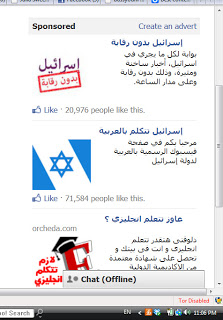
Facebook recommends I follow Israeli hasbara!

Why would Facebook recommend that I follow the Arabic pages of "The Israel Project" (an organization whose job it is to whitewash Israeli actions, in typical Hasbara fashion, and which provides its followers with talking points to justify government and settler behaviour) and that of the Israeli government?

I must say, those folks are doing a great job (for their job, that is). Targeted advertisement, sponsored pages, content in Arabic. Even misleading logos: The Israel Project's page is actually titled "Israel Uncensored". It posts Israeli songs, covers of Om Kalthoum songs by Mizrahi artists, and the occasional article about how awesome Israeli Arabs have it. Sigh. Click on a link and you're taken to their official website - which, unlike their Facebook stream, is heavily political, and provides the 'revisionist' version of facts as viewed and approved by the Israeli government.


The Israeli government one's is less subtle - it's titled "Israel Speaks Arabic" and features the State's official emblem (the white menorah on blue background), and posts news about the Ministry of Foreign Affairs - and the latest piece they posted was about "the real nakba" (Arab Jews').
Which is, well, a little pathetic and counterproductive - not the best way to win Arab hearts, is it.. Keep doing that, guys!

Sunday, May 15, 2011

Liechtenstein, Europe's slutty aunt


In the family Europe, Liechtenstein would be the rich, single and somewhat slutty aunt, who's lovely to her nieces but regularly gives the rest of the relatives the slap.

Its scenic capital Vaduz is home to, ummm, 5000 inhabitants. (so you could fit 3200 Vaduzs in Cairo). Apparently half of those sell stamps to tourists and the other half works in one of the dozens of banks and money laundries - sorry, I meant assets managements funds.

Me and 96% of the population of Vaduz.


It's ridiculously expensive, significantly more than Zurich it felt to me.
The main advice I found about Liechtenstein on travel websites was a version or another of "don't go unless it's on your way between Switzerland and Austria or if you want to go to say that you've been there".

Yep. *raises hand*. Second category would be me, thank you very much - that and i am less than an hour away by train. So i went for a short day-trip.

I ask the woman at the tourist office how she felt about people only going to Liechtenstein because no one knows what the fuck this Liechtenstein is; she gives me a nasty look and mumbles that "no one knows about the countries they're going to anyway", so i rephrase.

"I have a friend in San Marino who tells me he's upset that tourists just go because it's a micro-country and that they just want to get their passport stamped, even though there are plenty of beautiful things there. Do you feel the same about people who come here?"

She speaks about the castle (umm, yeah), the scenery (not very different from that in Switzerland or Austria, if not inferior), and the fact that they have a Prince - "it's a little like a fairy tale, you see".

Oh I see. The Prince of Liechtenstein is Western Europe's last absolute monarchy - a few years ago, the Prince emotionally blackmailed the people (he threatened to leave the country and move to Austria - if a referendum didn't grant him the right to hire and fire governments at will; he also had the right to dissolve the parliament and call for elections. He was granted his wish, which makes him effectively as powerful as his fellow Gulf princes.

Not exactly fairy tale material, I guess.

I walked around town; we had a beautiful weather. Stopping to take photos of the flag hanging here and there, which I found very amusing in itself.

I hiked up to the Prince's castle - it's a half-hour hike - and got to what was a 12th century hamlet that has been renovated and expanded several times.
It is, for all intents and purposes, architecturally ugly as fuck, unless you're planning on filming a film taking place in medieval Europe, in which case it's great.

Ze castle

There's no visit of the Castle - but, and that's hilarious, there's an electric buzzer on the outer gate. Almost wanted to ring, but there was a guard standing...

So I went up to the guard to ask if I could go in to pee.
He didn't find that funny.

Hello, can the Prince come out and play?

Anyways. Bought me a grossly overpriced fridge magnet, sent a few postcards - thought it would be amusing for friends to get a postcard from Liechtenstein, right? :) -, got my passport stamped, and made my way back to Switzerland, crossing the border by public bus. I found that hilarious... 3.40 CHF to cross an international border! Ah, Europe...

Not exactly innovative, are they.

Friday, May 06, 2011

Join the #Come2Egypt Campaign!


Because Egypt's tourism industry has seen better days (and that's an understatement...) a few friends and I wanted to spread the word about, essentially, what makes this country awesome.

So we started by tweeting/writing about the trips we took locally, with the hashtag #Come2Egypt. And posting photos, cracking jokes, reminiscing, talking about friends and places and moments and why the heck we love this country!

Today - starting 4 pm Cairo time, actually, so in a little while - we'll be tweeting rather massively.
And we want YOU to join us!

It's not about twitter-trending the topic (though it would be nice, but that's far from being the purpose) but the idea is to make enough of a buzz for people to notice!

So, there! Write about why you like Egypt, why you think people should come, write a little post, post plenty of photos, and mostly tweet - using #Come2Egypt! be serious, be funny, be goofy - as long as you write write write!
This isn't a one-off thing - but we're trying to make it a staple of the twittersphere.
So? Are you in? ;)


* For background about whether it's actually a good idea to #Come2Egypt (don't take our word for it...) see this Wall Street Journal article: "Egypt Now? Yes, and Bring the Kids"


Wednesday, May 04, 2011

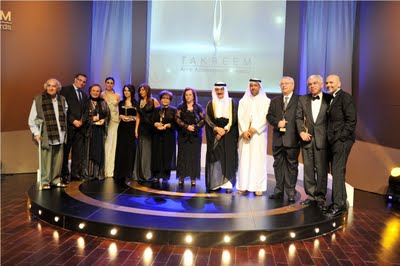
"We" won the TAKREEM Peace Award!


"We" being "Arab Youth". You know, for the revolutions and stuff.
(yes, much less exciting when you know it. (But it's still better than the Time Magazine Person of the Year being the ubiquitous "You", right?

The award is one of several TAKREEM Arab Achievement Awards, which were bestowed in Doha earlier this week.

Founded by TV host Ricardo Karam, the idea behind "Takreem" is to honour innovators in the Arab world in a number of fields, including a few classics - advancement of peace, education, scientific and technological achievement, woman of the year - as well as few innovative ones: "outstanding cultural leadership", "young entrepreneur", and "exceptional international contribution to Arab society" (which is an exceptionally long title, for that matter).

The idea is solid: incentives work, and there is indeed a large number of people doing wonderful work in the Arab World that deserves to be recognized...

This year, the international jury included the likes of Jordan's Queen Nour, Egypt's Mohamed El Baradei, Algeria Lakhdar Ibrahimi, Palestine's Hanan Ashrawi, Mexico's (and Renault-Nissan's) Carlos Ghosn, among others.
The laureates are also equally diversified (though, I see no Egyptians! Argh! :-|)

I don't know about you but I saw very little written about the Awards (and what I saw came from social media, not mainstream).

Pity the awards got so little coverage, despite this being the second consecutive year it is organized. I wonder if they got some coverage in Lebanon, where the organization is based...


Check out Takreem's website to see who won what!

The laureates

Tuesday, May 03, 2011

"I will not serve!" campaign against the Israeli civil service

The Arab Youth (Baladna) association is a Haifa-based organization offering services and assistance to Palestinian-Israeli youth.

I stumbled upon this interesting video - part of a campaign titled "I will not serve!" (أنا مش خادم!) denouncing the Israeli 'Civil Service' programme. The title is Arabic can also be translated as "I am not a servant!" - a deliberate double entendre I reckon.

The reasons they put forth for refusing the civil service mostly orbit around the fact the anti-Arab discrimination in Israel is not part and parcel of the national philosophy, not a matter of serving or otherwise; and that doing the 'civil service' shouldn't be - and indeed, isn't - a criteria that determines whether people receive state services: Druze villages, for instance, lag largely behind in higher education, despite serving in the army; army volunteers coming from 'unrecognized' Arab villages saw no change in their village's legal status after service. (Israel has systematically refused to recognize any Arab community established after 1948.. with only a single exception).

The video embedded here was released a few days ago (but the campaign started a while back) features a girl telling her friend she's considering going to civil service - and her friend tells her the civil service was established by the Israeli army, in an attempt to normalize the concept of service the State and the Army, etc. The music is atrocious, and the argument focuses on the Army connection rather than the reasons listed on the website which I summed up above. But overall, I think it's an extremely interesting campaign.